

Louis Alexander
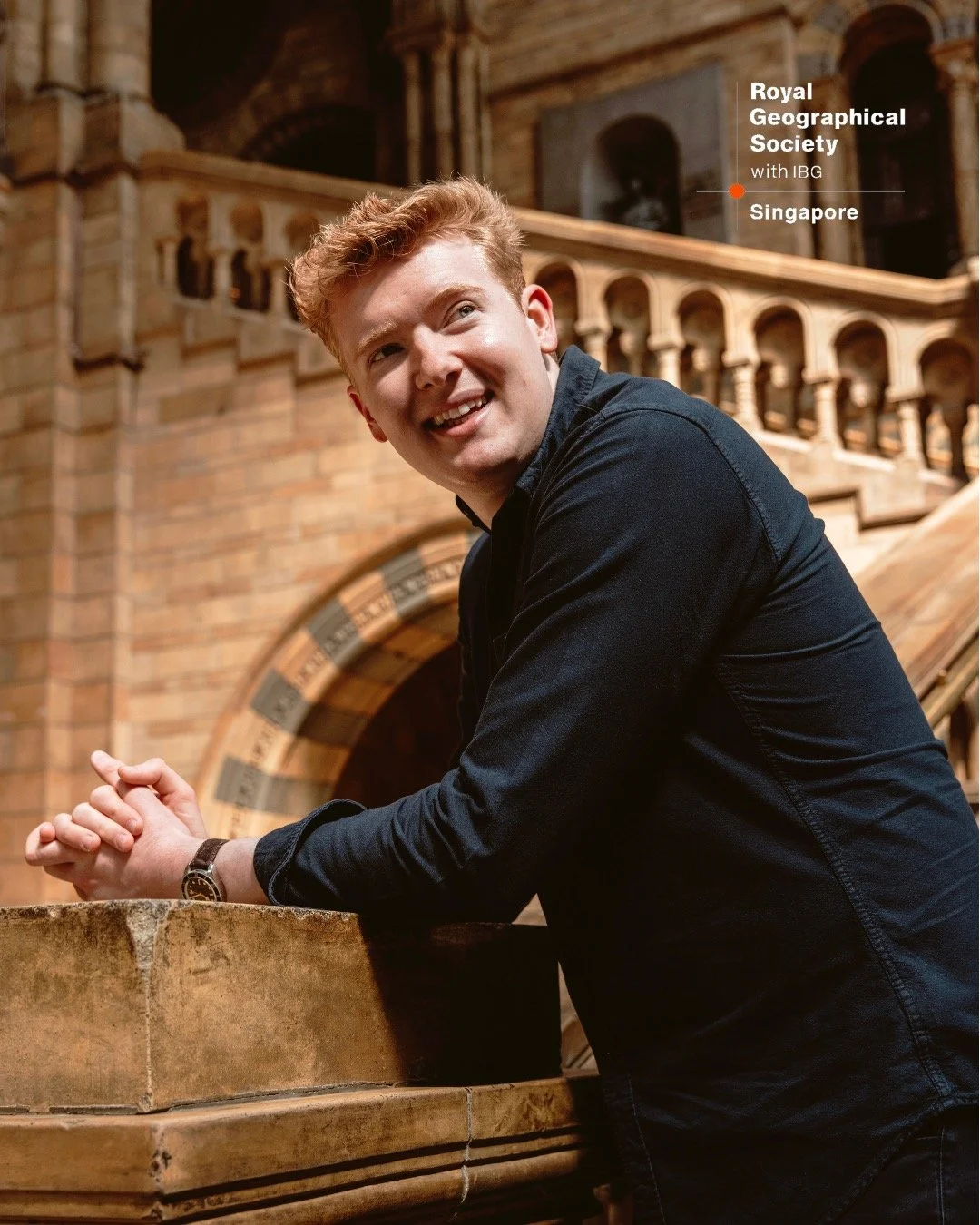
Louis Alexander is a 26-year-old professional adventurer who built his legacy on one principle: "I don't just chase records. I chase meaning."
A non-athletic kid from London who moved 15 times across 5 different schools by age 18, Louis's adventure education began at 18 when his mum revealed his grandfather Captain Rick's unfulfilled dream: climbing Mount Kilimanjaro after 38 years in the British Army. His grandfather never made it—17 years of dementia stripped everything away, including the ability to recognize his own grandson.
At 19, Louis attempted Kilimanjaro alone—no hiking poles, no altitude pills, pure ego. He was the first in his group to get altitude sickness on day 2. He summited, but barely: "I was the weakest in the group. The mountain stripped me of everything."
The defining moment came at 22 when he ran 17 marathons in 17 consecutive days—one for each year his grandfather suffered—starting from Captain Rick's care home. Day 2: the worst UK storm in 30 years hit. Roads closed. Schools closed. "I had no choice but to continue on." He'd never run two marathons back-to-back before, let alone 17.
His career exploded: Running marathons on all Seven Continents (jungles, deserts, Antarctica) and swimming marathons in all Seven Seas (31.4°C Arabian Sea, severe dehydration, skin peeling off at dinner). He became the first and only person in history to achieve both. Three Guinness World Records. Featured by National Geographic, BBC News, Sky News.
At 24, he stood in front of 80 of the UK's most powerful people at 10 Downing Street—Ministry of Defense, Ministry of Education, Ministry of Science. "What do I know? I just shared my story for an hour." His letter to the Prime Minister about dementia diagnostics opened doors to policy change: "If you can get through to government, it goes from raising thousands to changing £100 million in policy."
At 26, after speaking at Eton College and the British High Commission in Singapore, Louis runs his mission with brutal transparency: "I never take any charity money. Corporate sponsorship pays for me—so if someone donates £10 to dementia research, their whole £10 goes to charity. The pots are separate."
The measurement system: "I've run through the Amazon Rainforest, swum Alcatraz without a wetsuit while everyone thought I was crazy, and stopped mid-marathon in Alaska for 10 minutes to watch a brown bear emerge from hibernation. What kind of adventurer would I be if I didn't stop to witness and respect the beauty of this world?"
Louis tells audiences hard truths: "My goal is to become one of the greatest modern day adventurers and to change the way that exploration is seen by the younger generation." He's raised hundreds of thousands for Alzheimer's Research UK—and he's aiming for £1 million.
After 633 days redefining what's humanly possible, Louis Alexander proved that great adventuring isn't measured by Garmin times—it's measured by £1 million raised for dementia research, inspiring tens of thousands across three continents, and the courage to turn personal tragedy into a legacy that will outlast any record.
His philosophy, inherited from watching his grandfather lose everything: "Purpose beats performance. Every single time."
Louis Alexander spent his twenties proving you don't measure adventurers by their world records—you measure them by the meaning behind every step, the lives they change, and refusing to take charity money because "if someone gives me £2,000 and I go raise £10,000 for charity by doing a challenge—that's just simple math."